
Songs of Innocence and Experience Review in City Magazine
Songs of Innocence and Experience: A Cruel Angel’s Thesis for Our Times
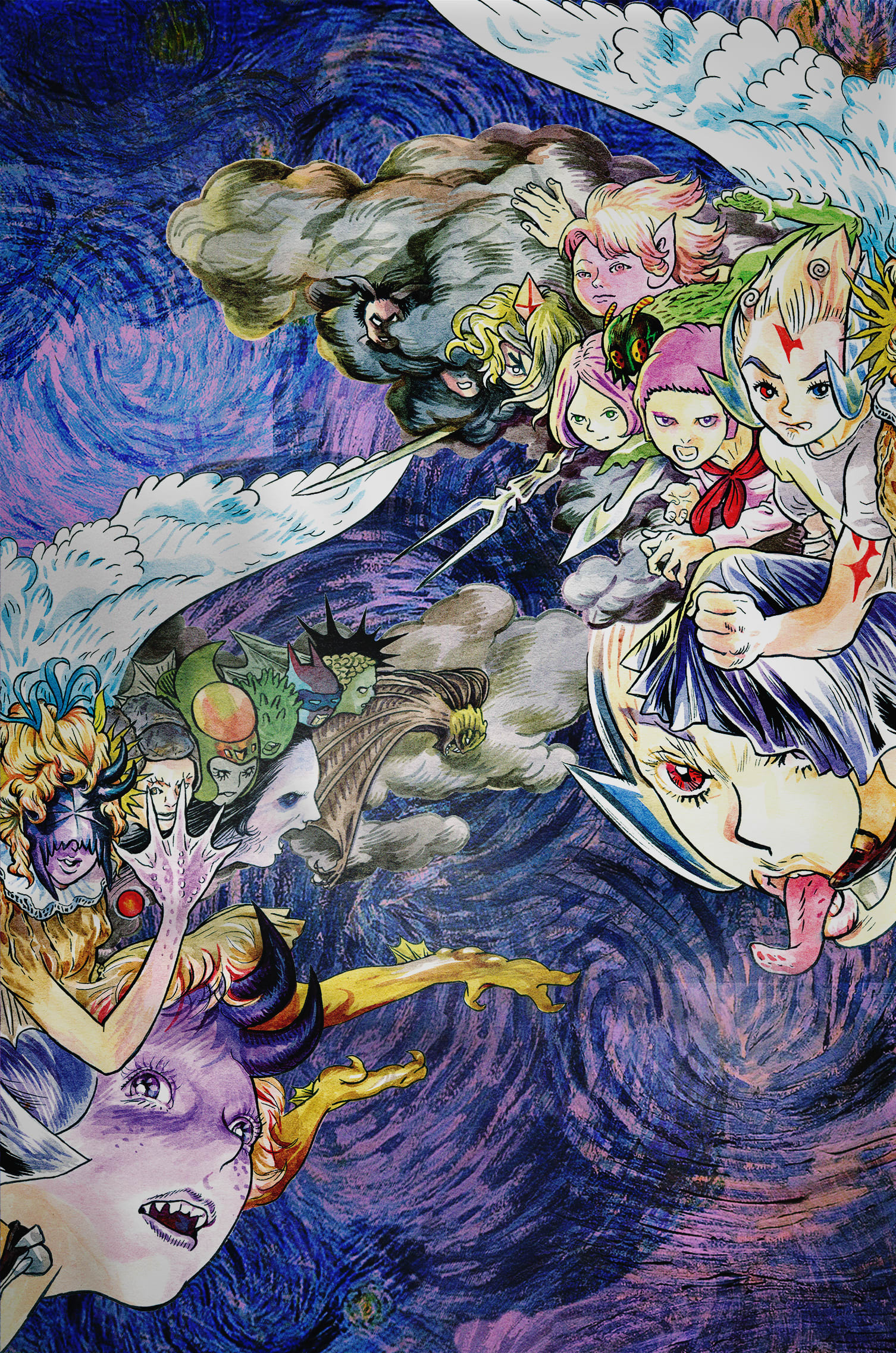
What is youth? Once we become too worldly, youth slips irrevocably away, and with those worldly eyes we begin to reinterpret innocence — assuming that youth means blissful ignorance, or asking “What would I do if I were still young?” to justify our perspective. The worldly cannot accept innocence, and innocence is not necessarily joyful; more often it’s fragile and filled with sorrow. Songs of Innocence and Experience is magical: it empowers young people to bravely tell their most innocent stories, using Paradise Lost as a symbol — not to dig into philosophical depth, but to make the characters’ stories brighter, and with dazzling stage effects to present youth in its highest color intensity. Two years ago, I believed this work could only be staged once — not to be repeated. I was wrong. Or perhaps not entirely — because the work has been vastly reimagined, no longer the same as the premiere. So writing another review is, indeed, quite justified.
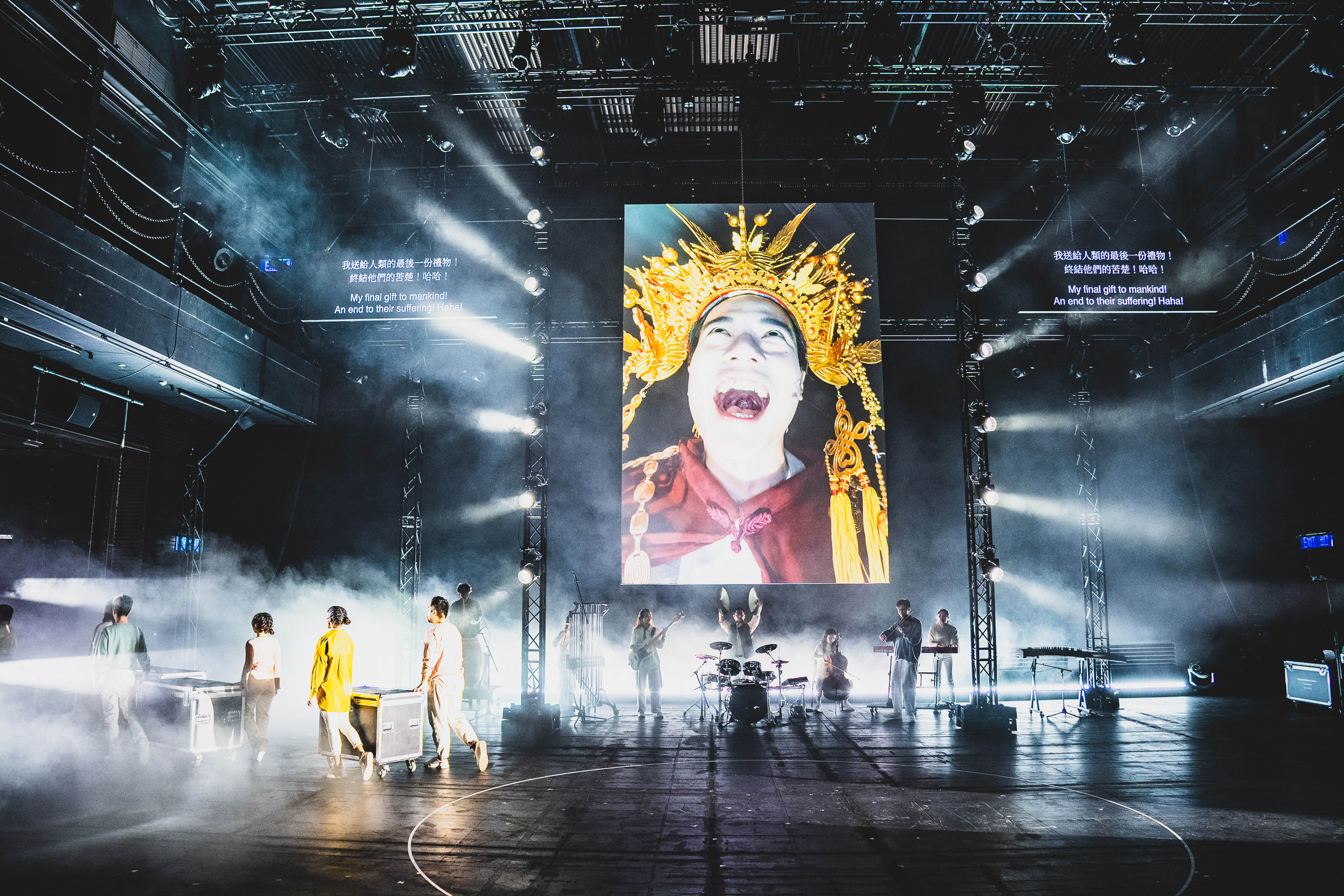
I’ve already analyzed the creative and performance style in my earlier review — the cross-media and subcultural extravagance, improvisational creation, the primal feel of object theatre, the unpolished recorded interviews, and the performers’ sincere self-expression all resonate as the truest forms of youth and innocence. Using the most youth-infused forms, these young people tell the stories they want to tell, and the worldview they see with innocent eyes. Two years on, that innocence seems different. Personal narratives have shifted from imminent graduation and naive ignorance to stories weathered by a year of worldly erosion. This devised performance, initiated by the actors themselves, now feels like watching the characters of Digimon grown up — shaped by their development, giving the entire piece a new tone. Each performer has grown in their own way: students busy with coursework and graduation have become young professionals striving in workplaces with no clear foothold; some are caught between living with family and gaining independence; others continue to pursue belief, family, or love, constantly pushing their own growth over two years, and some of us simply want to cry innocently amid life’s wreckage. The performers still display their unique colors, and the whole production feels more richly hued and profound.
The Paradise Lost motif, a mirage projecting the actors’ life pressures, remains entirely present, but the focus and effect have changed. Because the drama has developed in sync with the actors’ journeys, the emphasis two years ago was on the struggle of whether to rebel against divine oppression; this time, it lands on the endless torment awaiting angels in hell after leaving paradise. This shift moves the play from its most dramatically tense moments to a more calm, absurd dramatic world. Although it loses some theatrics, it brings the performance closer to reality — placing each actor’s lived experience within the Paradise Lost metaphor. For example, Chan Wanyù facing two minutes with God; Cheung Cheuk-hàng striving to help others; Shen Zhuoyáo afraid to separate and be independent; Mok Jueh-bong forced to shoulder heavy burdens; Xi Le-xin living in a partner’s shadow; and Law Man-chak treating himself as God through self-centeredness — their personal traits and interpersonal dilemmas are organically woven into the Paradise Lost narrative. Beyond mythologizing performers’ lives, the work projects back into real society through the relations and struggles between angels or humans and God. The brilliance lies in the actors telling stories about their own lives and feelings without hitting broad social moralizing. But through Paradise Lost’s metaphor, we realize that to live well inevitably involves thoughts about society and politics.
This is most obvious in the pre-recorded interviews. Even when they answer the same questions two years later with similar immediate reactions, the thoughts, emotions, and silences are drastically different. Two years later, life holds more considerations, more sadness from farewells, more real fear of confinement, more doubt about growth and the world, more helplessness about the unspeakable — innocence wrapped in worldliness, turning into a worldly faith in the future. It raises a question: are these interviews raw and unfiltered, or have they been selected and edited? Have we ourselves been limited by unspoken self-restraints? When they don’t speak of politics, we may mentally fill in politics everywhere — because politics has deeply pierced the flesh, and if life is reflected sincerely with its blood and flesh, we can see it all. Paradise Lost is still Paradise Lost; angels still leave heaven; humanity still exits Eden. The prophecies of two years ago now feel even more fitting for today — perhaps a sad reflection of our times.
Automatically translated from the original Chinese

Originally published in: City Magazine. We create a mirrored version of reviews and articles about our shows for archival purposes, so that we can retain a version if the original disappears. We always link to the original publisher and credit the author. However, if you are the owner of this material and you would like us to remove it, please get in touch.