
At first glance, “solo performance” simply describes a format: one performer alone on stage. But if we approach it from the proposition that identity itself is a performance, then what exactly are we watching? The answer is anything but straightforward. The soloist is not merely demonstrating technique; they are using live performance as a method—speaking and constructing the self simultaneously. The stage becomes an exposed duel. The performer must endure the vulnerability of revealing the intimate; the audience, too, is challenged. The person before us is no longer a neutral conduit for our projections. The gaze cannot roam freely. Performer and spectator reflect one another—until, at some moment, their eyes meet, and something shifts.
If we accept that the body is wrapped tight in layers of cultural inscription, then to explore identity through one’s own flesh is to refuse proxy. No stand-in, no representation by others—only the painstaking act of peeling oneself open, examining, reassembling. The five autobiographical works discussed here are all written and performed by the same individual in each case. Borrowing media theory’s distinction between “declarative time” and “performative time” in video, I found myself wondering: in autobiographical solo theatre, does a similar duality exist between the “body being narrated” and the “body in the act of narrating”? And how clearly—or how ambiguously—must these two bodies be delineated to make identity inquiry theatrically potent?
Reading in Counterpoint: Michelle Li’s Karaoke and Wong Tai-fai’s W.T.F.
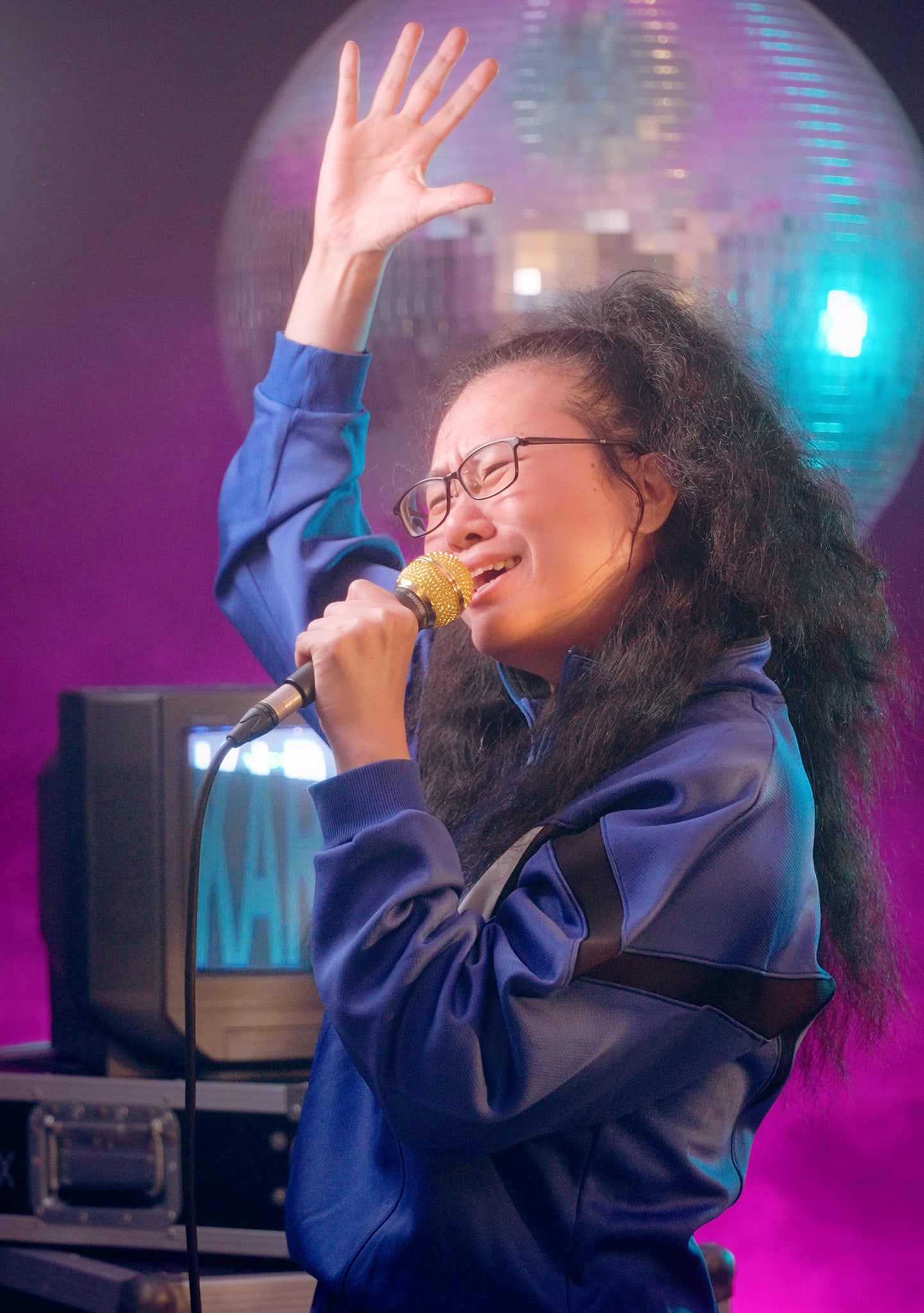
Placing Michelle Li’s Karaoke alongside Wong Tai-fai’s W.T.F. makes for a fascinating contrast. Li’s work is outward-facing; Wong’s is introspective. Li traces childhood and family relationships; Wong revisits the peaks and troughs of an artistic career. Karaoke, for Li, is both personal memory and cultural artifact—a time capsule of 1980s and ’90s Hong Kong. Wong’s title, an acronym of his own name (Wong. Tai. Fai.), begins and ends with the self, yet never denies history’s hand in shaping destiny.
Both works weave together personal and Hong Kong history, with 1997 functioning as a structural hinge. In Karaoke, Li’s supple, quicksilver vocal shifts carry us through Cantopop hits from her youth. These familiar melodies stitch the chapters seamlessly; at times it is hard to tell whether the story unfolding belongs to her or to us. The songs that accompany our growth, no matter how much we wish to forget, surface in moments of fragility. Cantonese—dismissed as unsuitable for “serious” writing—remains mother tongue, shaping identity long before one understands the concept of language itself.
Karaoke is tightly structured, its balance between private and collective memory deftly calibrated. Li’s crisp diction and instinctive comic timing draw the audience close. Her recent collaborations with the Hong Kong company Rooftop Productions have been consistently surprising; one senses she is poised for yet another leap.
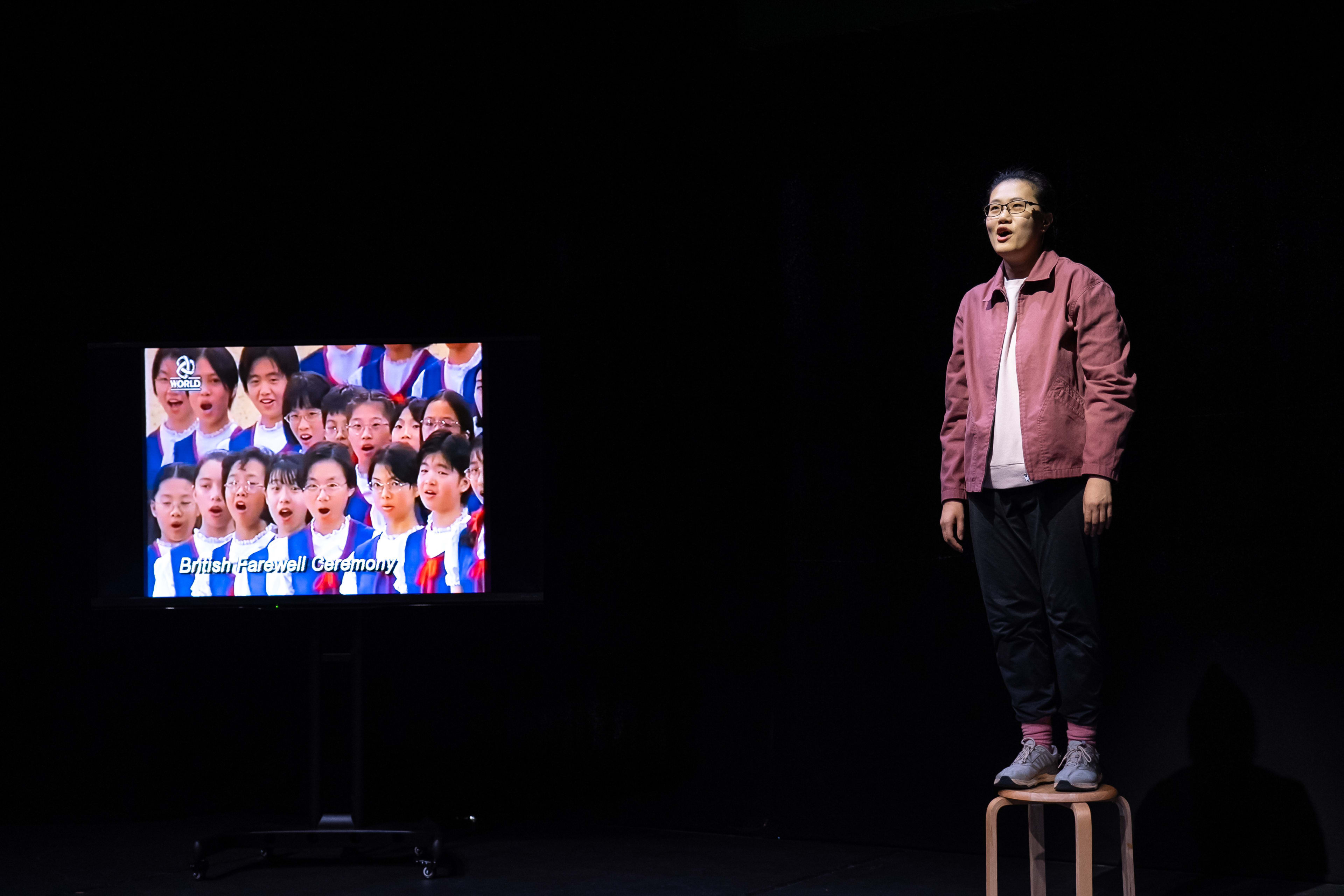
With W.T.F., it took me some time to realize I was “watching a performance.” Seated in the front row, and knowing Wong personally, the atmosphere felt more like a conversation than a theatrical event—even though he held a script in hand. His acting is weightless, almost invisible. He opens with a quote from Martha Graham—“I am a dancer”—and among his many identities, chooses “dancer” as the narrative core. In pre-handover Hong Kong, art intersected with a society intent on making a final fortune before the deadline. Without the illusion of gold on the ground, perhaps the artistic path would have seemed less romantic—or less foolish.
After 1997, as Hong Kong stumbled in search of identity, Wong’s identity as a dancer found more space abroad than at home. By 2018, local recognition came in the form of an award, but without a passport to the centre. Social movements, the pandemic—he continued to dance at the margins. In his thirties, panic; in his sixties, acceptance. Create—to survive, to exist. Through creation, erase the boundary between “art” and “life.” Recover the five-year-old who once lost himself in movement, the joy and stillness hidden in the body.
Wong calibrates distance with precision. Mining the archive titled “Wong Tai-fai,” he narrates in his signature cool timbre—warm but unsentimental, self-mocking yet free of bitterness. When words run dry, he peels an apple with deliberate focus, chewing slowly. As with drinking water, only the drinker knows whether it is warm or cold.

Originally published in: IATC (HK). We create a mirrored version of reviews and articles about our shows for archival purposes, so that we can retain a version if the original disappears. We always link to the original publisher and credit the author. However, if you are the owner of this material and you would like us to remove it, please get in touch.